
Expert Hardwood Floor Refinishing for Commercial Spaces in Dallas TX
Professional hardwood floor refinishing services that restore the beauty and durability of your commercial wood floors. Our dust-free sanding and premium finishes deliver stunning results with minimal disruption.
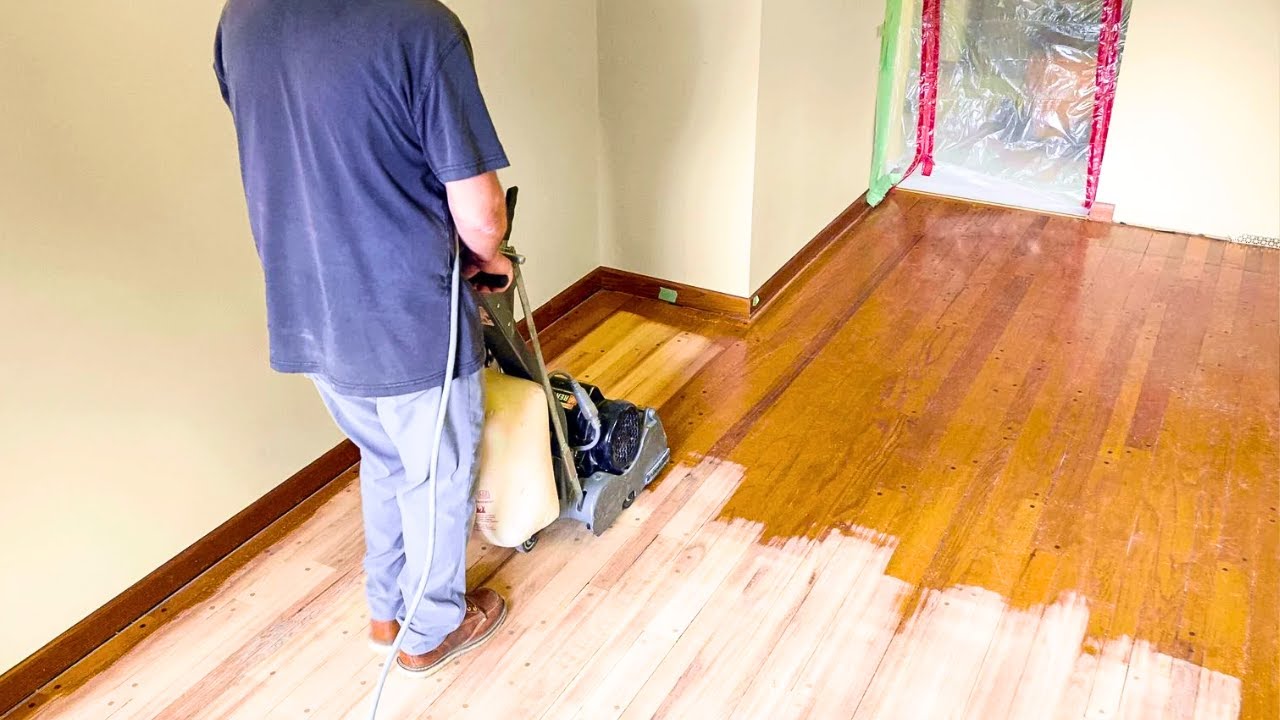
Hardwood floor refinishing restores the natural beauty and durability of commercial wood floors that have been worn by years of foot traffic and use. Our dust-free sanding technology and premium finishes deliver stunning results that extend floor life while creating the elegant appearance that enhances any commercial space.
Dust-Free Sanding Technology
Traditional floor sanding creates clouds of dust that can contaminate your entire facility, requiring extensive cleanup and potentially disrupting business operations. Our dust-free sanding systems capture over 99% of sanding dust at the source, containing it within the equipment and preventing it from spreading throughout your building.
This technology allows us to refinish floors with minimal disruption to your business operations. While we still recommend scheduling refinishing during low-activity periods, dust-free sanding means that adjacent areas can remain operational, and cleanup time is dramatically reduced compared to traditional methods.
Sanding and Preparation Process
Every hardwood floor refinishing project begins with a thorough assessment of floor condition, wood species, and existing finish type. We identify areas requiring repair, such as deep scratches, gouges, or damaged boards that need replacement. Our preparation process includes removing all furniture and fixtures, protecting adjacent areas, and ensuring proper ventilation.
The sanding process progresses through multiple grits, from coarse initial sanding that removes old finish and surface damage to fine finishing sanding that creates the smooth surface necessary for flawless finish application. Our technicians monitor sanding depth carefully to ensure that we remove only the necessary material while preserving as much of the original wood as possible.
Stain Application and Color Matching
After sanding, we can apply stains to achieve your desired color tone or enhance the natural wood grain. Our color matching expertise allows us to blend new sections with existing floors or achieve consistent color throughout large areas. We provide stain samples so you can approve the color before full application.
For facilities requiring specific color schemes or brand standards, we work with you to achieve exact color matches. Our stain application techniques ensure even coverage and prevent blotching or streaking that can detract from the final appearance.
Premium Finish Application
The finish we apply determines not only the appearance but also the durability and maintenance requirements of your refinished floors. We offer both water-based and oil-based polyurethane finishes, each with distinct advantages. Water-based finishes dry quickly, have low odor, and maintain the natural wood color, while oil-based finishes provide deeper color enhancement and traditional appearance.
We apply multiple coats of finish, sanding between coats to ensure proper adhesion and smoothness. The final coat receives special attention to achieve the flawless surface that commercial spaces require. Our finish application techniques prevent bubbles, streaks, and other imperfections that can compromise the professional appearance of your floors.
Scratch and Damage Repair
Before refinishing, we address individual areas of damage that require special attention. Deep scratches, gouges, and water damage may require localized repair techniques including board replacement, wood filler application, or specialized sanding. Our goal is to restore the floor to uniform condition before applying the new finish.
Frequently Asked Questions About Hardwood Floor Refinishing in Dallas
Do you service all areas of Dallas?
Yes, we provide commercial cleaning services throughout the entire Dallas-Fort Worth metroplex, including Dallas, Plano, Irving, Arlington, Frisco, and all surrounding areas.
Are your cleaning products eco-friendly?
Yes, we use eco-friendly products and environmentally responsible cleaning methods as our standard practice. Our green cleaning approach protects both your workplace and the environment.
Can you work after business hours?
Absolutely. We offer flexible scheduling including evenings, nights, and weekends to minimize disruption to your Dallas business operations.
Related Cleaning Services in Dallas
Warehouse Cleaning Services
Comprehensive warehouse cleaning services tailored for Dallas industrial facilities. From high-dust ...
Medical Facility Sanitization
Specialized medical facility sanitization services meeting strict healthcare standards. Our trained ...
Commercial Carpet Cleaning
Professional commercial carpet cleaning services that remove deep-seated dirt, stains, and allergens...
Ready for a Cleaner Facility in Dallas?
Contact us today to schedule your hardwood floor refinishing service. Free estimates available for all Dallas area businesses.
Schedule Service Todayservices planning guide
How to plan hardwood floor refinishing for a commercial facility in Dallas
Commercial Cleaning of Dallas uses the following planning framework to help property managers and business owners turn a request for commercial cleaning and janitorial service into a scope that can be walked, priced, scheduled, and checked. It is designed for practical comparison and does not replace site-specific safety, material, vendor, or regulatory requirements.
Define the Work Before Pricing It
For multi-tenant or mixed-use properties, hardwood floor refinishing should be divided by responsibility zone. Common areas, tenant suites, back-of-house spaces, loading areas, public restrooms, and restricted rooms can then receive schedules and approval rules that match their actual use. A walkthrough for hardwood floor refinishing is most productive when the decision-maker identifies the spaces that create complaints, the areas that carry the most traffic, and the tasks the current program misses. Those observations turn a generic checklist into a practical scope tied to the way the property is actually used. Before pricing hardwood floor refinishing, document exclusions as carefully as inclusions. Exterior work, high access, consumable supplies, waste handling, specialty floor restoration, equipment interiors, and event cleanup can be scheduled correctly only when responsibility is explicit. Hardwood Floor Refinishing should begin with a written definition of the rooms, surfaces, fixtures, equipment boundaries, and access conditions included in the work. A useful scope separates routine tasks from periodic restoration so the facility manager can see what happens on every visit and what occurs only on a planned cycle.
Build the Schedule Around Operations
Daytime and after-hours service solve different operational problems. Day porter coverage manages visible conditions while people are present; after-hours crews complete disruptive or time-intensive tasks when work areas can be accessed safely and thoroughly. Access planning is part of service planning. Keys, badges, alarm procedures, loading access, elevator reservations, escort rules, and locked-room approvals should be confirmed before the first hardwood floor refinishing visit so the crew can complete the full scope without improvising. Recurring hardwood floor refinishing should include planned periodic work instead of waiting for visible deterioration. Rotating detail tasks through monthly or quarterly cycles protects floors, fixtures, glass, vents, edges, and other zones that routine visits cannot address completely. Facilities with irregular occupancy should use a flexible service calendar. Seasonal traffic, events, construction phases, tenant move-ins, inventory cycles, and weather can all create temporary cleaning demand that a rigid schedule will miss.
Make Quality Control Observable
Before-and-after documentation is especially valuable for one-time or restorative hardwood floor refinishing. It establishes the starting condition, records the completed result, and helps the facility manager decide whether a recurring maintenance cycle would prevent the same buildup. Consistent crew assignments improve hardwood floor refinishing because the team learns access routines, material sensitivities, recurring problem areas, and the expectations of the facility contact. Coverage plans are still necessary for absences so consistency does not depend on one individual. Inspection frequency should reflect the complexity of the account. A small weekly office may need periodic supervisory review, while a high-traffic or regulated environment may require documented checks several times each week. The account review should examine service requests, inspection findings, occupancy changes, supply use, and upcoming facility events. That review keeps the program aligned with the property instead of allowing an old scope to continue after the building changes.
Match Methods to Materials and Risk
Color-coded cloths, pads, and tools can reduce cross-use between restrooms, food areas, workspaces, and public surfaces. The exact system matters less than having a documented method the crew can follow consistently. A material-safety discussion should include storage and labeling. Facility contacts should know where products and equipment will be kept, which rooms remain accessible to occupants, and how spills or damaged containers are reported. Equipment should be selected for the facility rather than for convenience. HEPA filtration, low-moisture extraction, auto-scrubbing, water-fed poles, pressure equipment, or detail tools may be appropriate depending on access, surface, soil, and reopening time. Product selection should match the task and the occupied environment. Cleaning, degreasing, disinfecting, descaling, and finishing are different functions; using one product for every surface can leave residue, reduce effectiveness, or shorten asset life.
Use the Walkthrough to Build the Scope
The walkthrough should follow the facility’s traffic pattern from entrances through work areas, restrooms, support rooms, and exits. This reveals where soil enters, where it concentrates, and which tasks must be completed in a particular order. For larger properties, divide the walkthrough into zones and record the floor type, use, occupancy, and desired frequency for each. This produces a proposal that can be adjusted by zone without rewriting the entire program. Access and safety constraints should be demonstrated, not merely mentioned. Alarm panels, loading doors, restricted areas, waste points, water access, electrical access, and equipment storage can change the labor plan materially. Ask department leads or regular occupants where cleaning failures are most visible. Facility managers often know the formal complaints, while daily users can identify recurring issues such as neglected corners, supply shortages, or timing conflicts.
Put the Service Agreement in Writing
The agreement should explain how additional work is approved. Emergency cleanup, event service, construction dust, floor restoration, and extra porter coverage should not be performed or billed through an informal request that no one can later verify. The agreement should state how holidays, weather closures, and client-requested skips are handled. These events affect visit counts and staffing, and the billing treatment should be clear before the first calendar exception. A commercial cleaning agreement should attach or reproduce the approved scope, frequency, service window, periodic task calendar, supply responsibilities, access rules, and communication contacts. The written detail protects both the property and the service team. Pricing should state whether it is monthly, per visit, hourly, or project based and should identify the assumptions behind it. Changes in occupied square footage, frequency, access time, or task scope need an agreed method for repricing.
Plan for Dallas Facility Conditions
Fast regional growth creates frequent move-ins, renovations, tenant turnovers, and occupancy changes. The cleaning scope should be reviewed when a property changes use instead of assuming the previous tenant’s schedule remains appropriate. A local service plan should account for the property’s immediate environment. Construction nearby, open parking, landscaping, loading activity, and pedestrian traffic can change how quickly dust and debris return after a visit. DFW traffic makes realistic arrival windows important, especially when a crew must meet security or elevator access at a fixed time. The plan should protect enough on-site time to complete the work rather than compressing the scope after a delayed handoff. Properties across Dallas–Fort Worth vary widely in access, occupancy, and operating schedule. A downtown office, suburban medical suite, industrial building, retail center, and hospitality property should not receive the same labor plan simply because their square footage is similar.
Compare Providers on More Than Price
A pilot or structured startup can be useful when the facility is complex or the current condition is uncertain. Define what will be evaluated, how long the evaluation lasts, and what information determines the permanent scope. Ask each provider to explain staffing assumptions, visit length, supervision, equipment, and the process for covering absences. The answer reveals whether the proposal is an operating plan or simply a price attached to a task list. When comparing hardwood floor refinishing proposals, normalize the scope before comparing price. A lower monthly number may exclude periodic work, supplies, supervision, floor care, or enough labor to complete the stated checklist. Review the proposal for vague language. Terms such as “as needed,” “regularly,” and “periodically” should be converted into frequencies, triggers, or approval rules before the agreement is signed.
Start, Measure, and Adjust the Program
Closeout reporting should match the account’s complexity. A small property may need simple completion confirmation; a larger or specialized account may need inspection notes, issue photographs, supply alerts, and a record of periodic tasks. A stable program still needs review after renovations, staffing growth, seasonal traffic, operating-hour changes, or new equipment. Each change can alter soil load, access, or the time available for hardwood floor refinishing. The crew should record conditions outside the approved scope rather than quietly ignoring them or performing unapproved work. Photos and concise notes allow the facility manager to decide whether a separate service is warranted. Periodic tasks should be placed on a calendar at startup. Floor work, carpet extraction, glass detailing, vent cleaning, high dusting, pressure cleaning, and other rotating services are easier to budget when dates are planned.
Bring to the walkthrough
- Approximate square footage, floor plan, and operating hours
- Current frequency, known complaints, and priority areas
- Flooring and surface notes, restricted rooms, and access rules
- Desired start date, budget constraints, and approval contacts
Expect in a written proposal
- Task scope by zone and visit frequency
- Service windows, periodic work, and supply responsibility
- Quality checks, communication, and correction procedures
- Pricing assumptions, exclusions, and change-order rules